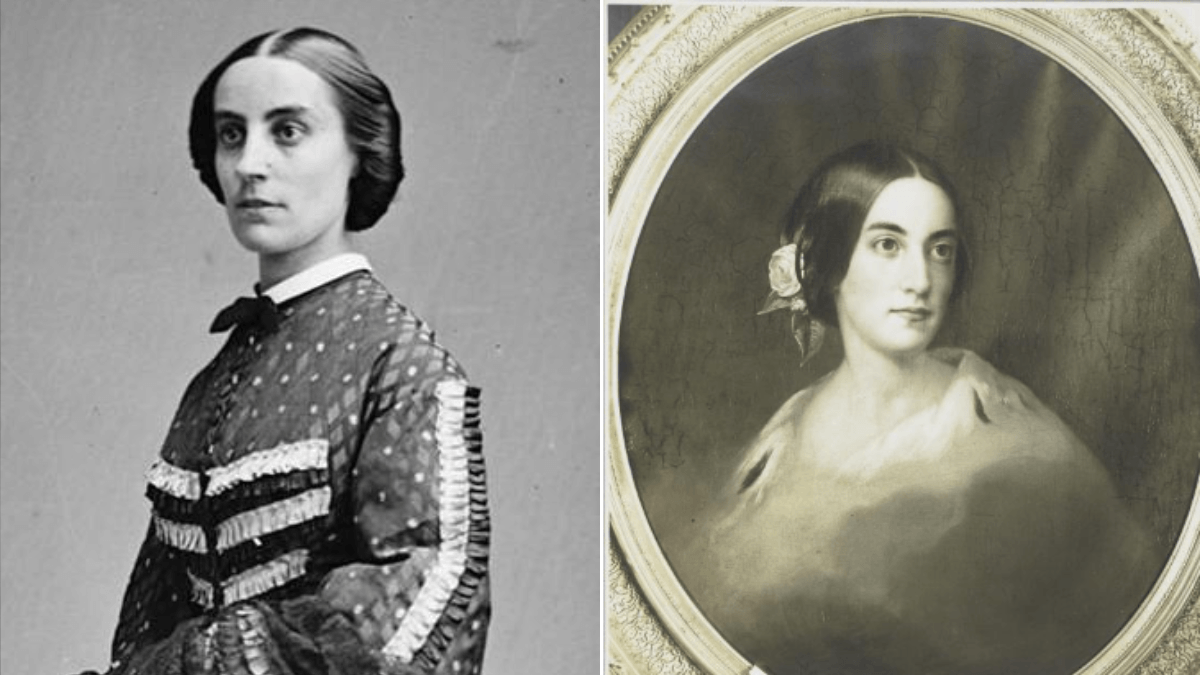

From my reading of the family history, Elizabeth Hamilton Culm was undoubtedly better understood no longer through her role as daughter, wife and granddaughter, but through the way she connected generations. She was born in 1831 and died in 1884, becoming a human bridge between the early Republic and the Gilded Age. Her connection to her own family lines of Hamilton and Schuyler placed her within a powerful part of America’s history, an even deeper history defined around how she carried those descendants through political memory, the military, and prevailing social expectations, giving them their own meaning. She became an organizer, founder, and patron whose work touched institutions, causes, and people, making her more than a guardian of the family legacy .
What sticks out to me is that Elizabeth didn’t seem content to determine the rhetorical on the bosom of plates. Her life suggests a quieter influence shaped through her ability to raise men, give money and attention, and help form communities with clear motivation Her historical family lines gave her an unusual place to start, but they do not fully explain her contributions. Instead, her situation is akin to a torch being carried along a spreading trend that shines aside for others before moving forward on its own. That quiet pressure makes it easy to explain why her story remains a necessary rallying point between the family lifestyle and public providers.
Elizabeth Hamilton Cullum Family and Kin
Elizabeth Hamilton Cullum grew up in a home where records and memories from a relative were part of everyday life. Her father, John Church Hamilton, became a lawyer and historian who committed himself to preserving the story of his father, Alexander Hamilton. His work was remembered as a lifelong project, so the past of Hamilton’s own family always became close in the home. It is easy to imagine how this shaped the mastery of identity, heritage, and duty in Elizabeth’s famous family.
Her mother, Maria Eliza van den Heuvel, was connected to the Elizabeth van den Heuvel and Apthorp families and their business and social networks in New York. This mother division extended her identity beyond the name Hamilton. Her many siblings include Alexander Hamilton, Charlotte Augusta Hamilton, John Cornelius Adrian Hamilton, Schuyler Hamilton, Maria Hamilton Peabody, Charles Apthorp Hamilton, Adelaide Hamilton, William Gaston Hamilton, Lawrence Hamilton, Alice Hamilton.
Her longtime own family suffered the same fate. Her grandmother Angelica Hamilton was the pre-tech of the Hamilton guys, connecting Elizabeth to the authentic Hamilton home, and resident memories of the founding era include her paternal grandparents Alexander Hamilton and Elizabeth Schuyler Hamilton, her maternal grandfather John Cornelis and her maternal family. Elizabeth stood within a story that was of great importance to American history.
What makes this background especially interesting is its broad family identity. Her world had different branches, accents, and rooms, bringing together a patriotic tradition with a cosmopolitan elite social world in New York. Rather than seeing the family only as a mansion of famous names, I find it more useful to see it as a network of people whose memory continued across generations. Elizabeth Hamilton Cullum grew up at the center of that complicated family landscape.
| Detail | Information |
| Full Name | Elizabeth Hamilton Cullum |
| Born | 1831 |
| Died | 1884 |
| Father | John Church Hamilton |
| Mother | Maria Eliza van den Heuvel |
| First Husband | Henry Wager Halleck |
| Second Husband | George Washington Cullum |
| Known For | Philanthropy, literary associations, institutional work |
| Literary Association | Causeries du Lundi |
| Founded | New York Cancer Hospital |
| Major Work | Supporting women’s intellectual activities and cancer care |
| Family Heritage | Hamilton, Schuyler, Van den Heuvel, and Apthorp families |
Elizabeth Hamilton Cullum Marriage and Second Chapter
Elizabeth Hamilton Cullum’s first marriage began in 1855 with Henry Wager Halleck, bringing her directly into the naval world political and international game of the time. Their son, Henry Wager Halleck Jr., was born in 1856 and proved to be her easiest documented child. His brief existence and early death contributed to a deep private loss, and such grief was to be the inspiration and sympathy it later inspired in public portraits .
After Halleck died in 1872, Elizabeth entered a new bankruptcy by marrying George Washington Cullum in 1875. He became another naval officer, an engineer and officer recognized for his expert recognition Through Cullum, she connected with public life, institutions, and service. The surname Callum became deeply intertwined with her identity in later years as her philanthropic legacy took final shape, alongside a reminder of her past public achievements.
Final thoughts
The story of Elizabeth Hamilton Cullum is much less about a traditional business or political career and additionally about how influence became a meaningful public movement. As one of the socially respected women of the nineteenth century, turning non-public influences into lasting portraits and organized charity, her Causeries du Lundi for girls’ literature, founded in 1880, provided a space for women to think, write, and talk about extreme ideas. I see this as a sign of cultural confidence, developing a highbrow salon where ideas may want to develop like a highbrow greenhouse before reaching a much wider audience.
Her best success came with the founding of the New York Cancer Hospital in 1884, an example of pure institutional ingenuity and predictability. At a time when most cancer treatments were becoming regressive, ugly and experimental, she helped build a hospital aimed at the future She bequeathed the property to a medical foundation and made personal wealth and money for care, medicine and public life. Her monetary history thus became a structural legacy that was built to last. It was no longer just a book-pressed flourish that diminished over time; Long after her own life, her work was preserved together and made into a bookbinding.
FAQs About Elizabeth Hamilton Cullum
Who was Elizabeth Hamilton Cullum?
Elizabeth Hamilton Cullum was a 19th-century American philanthropist and social figure known for her family connections and charitable work.
When was Elizabeth Hamilton Cullum born?
Elizabeth Hamilton Cullum was born in 1831.
Who were Elizabeth Hamilton Cullum’s parents?
Her parents were John Church Hamilton and Maria Eliza van den Heuvel.
Who was Elizabeth Hamilton Cullum married to?
She was first married to Henry Wager Halleck and later to George Washington Cullum.
What did Elizabeth Hamilton Cullum help establish?
She helped found the New York Cancer Hospital in 1884 and supported women’s literary activities through Causeries du Lundi.
When did Elizabeth Hamilton Cullum die?
Elizabeth Hamilton Cullum died in 1884.