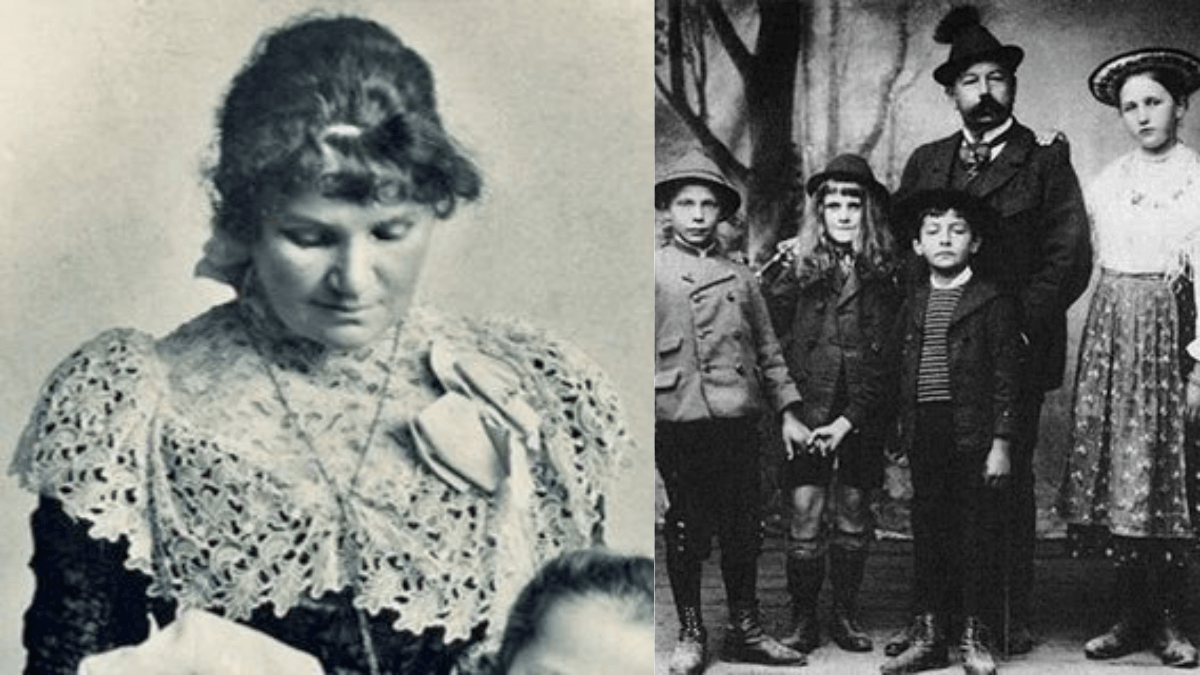

The advent to Franziska Tiefenbrunn starts offevolved offevolved offevolved with the clean dates that define her life. She changed into born on 21 April 1859 in Munich and died on 15 July 1923, moreover in Munich. She married Heinrich Ernst Göring on 26 May 1885, and her husband later died in 1913. These records area her existence during the nineteenth century and early 20th century, a pinnacle ancient duration in Europe.
The remaining some years of the nineteenth century and the years that decided added adjustments that reshaped European information. Franziska Tiefenbrunn lived thru this transition, making her tale a quiet link amongst generations. From my enjoy with historic biographies, such reminiscence is regularly preserved through the bones of recorded dates, family sports sports, and loss of life. Her marriage and circle of relatives lifestyles can therefore be visible as a hinge amongst one generation and each extraordinary, with alternate transferring slowly below everyday social stress.
Franziska Tiefenbrunn’s Family Role
Hermann Epenstein appears in own family tales as a long-lasting companion and affluent buddy inside Franziska’s familial environment. These circle of relatives narratives describe financial help, sanctuary, castles, and usa houses, giving his position a nuanced and complicated presence. In my view, such debts need warning, because reminiscence can create indistinct outlines which are difficult to absolutely verifying. The picture of a pillar and shadow, like fog at nightfall, shows how memories can preserve an impact with out making every element positive.
Rather than most effective a public discern, Franziska may be visible as a domestic anchor and matriarch inside the family. Her circle of relatives existence involved personal allegiances, social mobility, and diplomatic responsibility, at the same time as her husband held colonial positions and consular positions foreign places. Life in diplomat homes added an economic system of mobility, absences, and returns, requiring her to be a steward and stabilizer whilst coping with youngsters and responding to the social mores of the day. This social, diplomatic, and family function allows explain her region within the wider circle of relatives structure.
| Detail | Information |
| Full Name | Franziska Tiefenbrunn |
| Born | 21 April 1859 |
| Birthplace | Munich, Germany |
| Spouse | Heinrich Ernst Göring |
| Marriage | 26 May 1885 |
| Children | Five children |
| Known For | Family history and household life |
| Associated With | Hermann von Epenstein |
| Died | 15 July 1923 |
| Deathplace | Munich, Germany |
| Public Career | No well-documented public career |
| Historical Record | Mainly preserved through family and genealogical records |
Financial Standing and Family Life
The monetary detail surrounding Franziska is constrained, especially because there may be no clear document of an impartial public career. Her social status and fabric status had been carefully linked to her husband, Heinrich Ernst Göring, whose diplomatic salaries furnished a economic baseline, and to the patronage of Hermann Epenstein. His assets supported houses and opportunities that influenced the own family environment, while castles and estates have become part of the circle of relatives’s geography. From a historical research angle, this landscape can be considered as each a roof and a stage for own family and social lifestyles.
The available public registers do not provide enough element to give an explanation for the own family’s entire finances. Personal ledgers, non-public money owed, estate inventories, and different documents may offer a clearer photo, however such records might also continue to be in records or personal bins. This leaves the seen report as only a partial portrait of Franziska’s family, career, and monetary circumstances. Without those statistics, it’s far more correct to describe what is documented than to fill the gaps with assumptions.
Marriage, Family, and Diplomatic Moves
The own family story begins offevolved with Franziska and her marriage to Herr Göring, diagnosed as Dr. Jur., in London on 26 May 1884 or 1885. Heinrich, born in 1838 or 1839, have become a widower with 4 children and had a career that carried him away from Bavaria. Once a cavalry officer, he later entered diplomatic obligation and colonial responsibility, bringing postings, office work, well mannered society, and extended separations into family life. The sample moreover created a stage of dependency normal of diplomatic houses, wherein transfers and respectable obligations must form normal circle of relatives life.
The youngsters’s itinerary presentations that changing worldwide, almost like a passport marked via empire. In 1885, Karl Ernst changed into born in Rosenheim; in 1889, Olga Therese Sophie was born in Walvis Bay, German South West Africa, throughout Heinrich’s colonial tenure; and in 1890, Paula Elisabeth Rosa have turn out to be born in Rosenheim. Hermann Wilhelm followed on 12 January 1893 in Rosenheim, at the equal time as Albert Günther was born on nine March 1895 in Berlin-Friedenau. From a historical attitude, those movements amongst Rosenheim, Walvis Bay, and Berlin furthermore advise the traces created by way of way of the usage of real transfers and pay scales.
Hermann von Epenstein’s Family Support
The position of Hermann von Epenstein, a Jewish knight who had converted and moved through cosmopolitan circles, became essential in Franziska’s family for the duration of the Nineties. While Heinrich turned into remote places for business, Epenstein’s patronage have become extra than a personal connection. He housed and supported the 5 youngsters as their godfather, creating a family arrangement built around sensible assist. Burg Veldenstein in Franconia and Burg Mauterndorf in Salzburg were primary to this setting, with the castles providing security and area wherein the youngsters were nurtured underneath their high rafters.
The arrangement additionally affected the own family’s domestic economy, specifically because they depended partly on abnormal authorities bills. Epenstein’s extravagance furnished extra stability, however through 1912, the connection terminated, and patronage ended, which means stability changed as nicely. When Heinrich died on December 7, 1913, Franziska needed to manipulate widowhood with little cash, making the sooner financial dependence and Epenstein’s help giant elements of the family’s situations.
Final Thoughts
The surviving report offers Franziska through her home footprint, geographic footprint, and familial footprint as opposed to via a employer, posted work, or public workplace. Genealogies and youngsters’s biographies preserve information about her lives, together with her two youngest sons and their conflicting parables. Later historic discussions and family-tree boards within the 21st century repeat info including her London marriage date, delivery in colonial Walvis Bay, fortress-supported household, and dying in Munich. These info vicinity her within a much broader century marked via important storms, while showing why she stays regarded extra as a family parent than a traditional public determine.
The limits end up clearer while considering her personal life. There are not any recognised diaries, letters, or professional statistics that completely reveal her private voice, leaving the historic record incomplete. From my revel in with biographical studies, it is useful to treat this type of absence carefully as opposed to turn lacking documentation into assumptions. We have a file that offers us a partial view of her existence, with outlines, dates, and echoes in place of entire phrases. It is similar to searching through frosted glass: sufficient stays to apprehend the shape of her non-public records, however not enough to see each detail sincerely.
FAQ
Who was Franziska Tiefenbrunn?
Franziska Tiefenbrunn was a German woman remembered mainly through her family history and connections.
What is known about Franziska Tiefenbrunn’s life?
Records mention her marriage, family, time in London and colonial Walvis Bay, household life, and later years in Munich.
Did Franziska Tiefenbrunn have a public career?
There is no clear record showing that she ran a company, published work, or held public office.
What makes her biography difficult to document?
Few personal sources are available. Diaries, letters, and professional records do not provide a detailed view of her private life.
Where was Franziska Tiefenbrunn born?
Available biographical accounts state that she was born in Munich on 21 April 1859.
When did Franziska Tiefenbrunn die?
She died in Munich on 15 July 1923, according to the biographical record used for this profile.