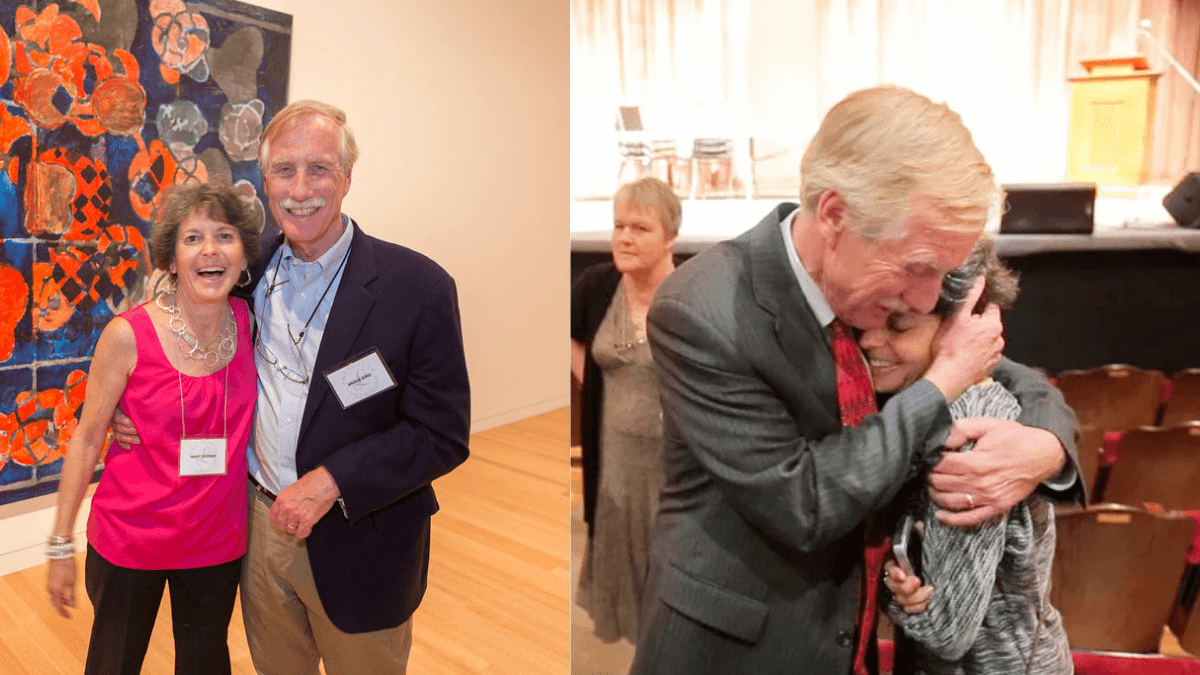

Mary Herman King, additionally known as Mary J. Herman, forged a professional path beyond her position as the wife of Angus King. Her ties to Maine political life were more visible when Angus King was governor of Maine, and she or he became first lady from 1995 to 2003. Still, her personal activities, service, and interest in her daily family existence helped shape her public identity .
Her images added up to education, nursing, family-building plans, women’s advocacy, lobbying, and public policy advice. To me, this kind of activity shows how public coverage can affect the lifestyles of ordinary people, women and survivors, where it is usually beyond what appears in the headlines. Through advocacy, she worked hard with agencies and politicians, helping to connect specific companies around concrete coverage goals.
Alongside her nonprofit activities, Mary Herman King also participated in network management of public carriers as well. Her role is often behind the scenes, giving her a quieter but overwhelming presence in public affairs. While Angus King later became a U.S. senator, her work remained connected to community, administration, expert advice, public campaigns, and political existence That consistency makes her a typical Maine parent while maintaining focus on her contributions.
Mary Herman King’s Early Career and Public Life
Mary Herman King‘s youth is not fully documented, especially her exact date of conception and age of onset. Her parents were identified in the 1984 Declaration of Marriage as Mr. & Mrs. David A. McKinnon. Her schooling and specialist experience later took her throughout the United States, beginning with university in the Midwest, observing in education in Washington, D.C., and observing in graduate school in Boston Her teaching pursuits grew around special education, disability, health care, and family assistance.
In 1973, King moved to Maine and settled around Calais and Perry, beginning a new phase of enjoyment of that network. Immediately after the career ladder, she built demanding understanding through networking. She worked in the basket shop in Passamaquoddy, became a teaching assistant at Peter Dana Point, taught midwifery, joined the family planning service and later directed a family planning program at Downeast Health Services associated with the Calais family planning tradition.
Her nursing heritage gave this work every practical aspect. King earned a nursing degree from the University of Maine at Augusta and gained experience in scientific healthcare earlier running through neighborhood health services with families hurt by substance abuse. She faced social problems such as real concerns regarding real families and her family problems in favor of legal issues alone.
| Category | Details |
| Full Name | Mary Herman King |
| Also Known As | Mary J. Herman |
| Known For | Public policy consulting, lobbying, advocacy, and community service |
| Husband | Angus King |
| State | Maine |
| Moved to Maine | 1973 |
| Education | University of Maine at Augusta; graduate studies in Boston |
| Professional Fields | Nursing, education, family planning, healthcare, lobbying, consulting |
| Notable Organization | Maine Women’s Lobby |
| Consulting Business | Mary J. Herman Associates / Mary J. Herman Consulting |
| Advocacy Areas | Women’s rights, healthcare, reproductive rights, family policy, children’s welfare |
| Public Role | First Lady of Maine, 1995–2003 |
| Community Work | Nonprofit service, community leadership, public policy |
| Recognition | Merle Nelson Women Making a Difference Award |
Mary Herman King Advocacy and Public Policy
As the plight of girls gained additional interest in Maine politics, Mary Herman King embarked on statewide advocacy efforts. In January 1981, she joined the Maine Women’s Lobby in the 110th Maine Legislature. Her previous images in the circle of relatives doing planning, health care, school teaching and community proposals gave her a concrete understanding of the concerns she could deal with through lobbying .
For King, lobbying became a new business, and she found many ways to enjoy herself.Rather than treating politics as a conflict between opposing camps, she focused on listening, building relationships, and countering assumptions about how character legislators might respond She created it.
Her paintings from the 1980s and 1990s defended women’s rights, child welfare, reproductive rights, their own family policy, and health care. The Maine Women’s Lobby had grown out of a grassroots reaction to the 1978 bill to fund shelters for battered women. Women around the country held fundraisers, which included.
Mary Herman King From Lobbying to Policy Consulting
After her work with the Maine Women’s Lobby, Mary Herman King solidified her career in business consulting and type-beating. She later ran the Mary J. Herman Partnership as a member of the Cohen-Herman Partnership, renamed Mary J. Herman. Her work has included community oversight, nonprofit consulting, facilitation and strategic assistance, serving clients and community partners of Maine nonprofits, foundations, small businesses, and organizations .
A key part of her job is to act as a bridge builder between businesses and lawmakers. She has helped practitioners and officials understand the processes as well as helping lawmakers see the real-world implications of public policy decisions and coverage issues. Her work also covers energy issues related to the Central Government. Her influence often lies far from political performances, but performs in parliamentary offices, networking activities, public meetings and conference halls.
Mary Herman King’s Quiet Strength and Service
Mary Herman King has created a bridge-like public life without seeking the limelight. Her story brings together her school, her carrier, and her family, and Maine becomes a crucial part of her lifestyle and narrative. She taught, recommended, and organized occupational health and policy, often with extreme ease. Her interest in Maine families, children, and groups informs his daily practical problem with desire.
She also has a clear experience of the geography of the story. In 1973, she moved to Maine, where domestic painting, marriage, and civic identity became deeply intertwined with the nation. While she was rightfully called up for Senator Angus King’s gubernatorial and later senatorships, her own work is enduring enough to mark the.
Mary Herman King Recognition and Achievement
Mary Herman King has received significant recognition for her work, including the Merle Nelson Award for Women Who Make a Difference. The honor shows a goal-oriented attitude that made a difference even if her efforts didn’t make headlines. Her accomplishments are not limited to formal education; They can also be understood as considering duration, scope, and developed through years of service. Her roles as coach, representative, politician, fraternity master, and public servant demonstrate the various phases of her professional existence.
I see that mixture as similar to a knitted fabric where each thread supports another. Family and civic engagements concentrated King in the public eye in Maine, as her prominence kept her South from becoming more famous. Instead, she remains a distinguished figure in state politics and wider society, where respect has been built up more through consistent work than the public.
Mary Herman King’s Family and Home Life
King County of relatives remains a part of Maine’s public imagination, in large part because Angus King’s political career came to national attention. Their family shows how politics and private life can go together without one canceling the other.
Molly King, Duncan King, James King, Benjamin King and Angus King III are part of this vast family history, while Mary simultaneously has her own place as mother, stepmother, spouse and animating force this makes the family ring more than a public symbol; A real family is formed with the help of records, complexity and love. Their public reviews typically return to values such as education, female fitness, community and mentorship over spectacle. These themes function as repeating melodies under the principle note of their universal existence.
Final Thoughts
Mary Herman King’s expert story is closely tied to the Maine Women’s Lobby, which has been part of Maine’s gender coverage bill since 1978. Activists have worked to demonstrate the will of the community in legislative victories backed by a clear presence in the Statehouse. The bill addressed domestic violence, financial security for girls, health care, reproductive rights, and protection from discrimination, while the education employer simultaneously in 1990 advanced the work through scholarship, public schools, leadership reform, and coverage assessments under the Maine Women’s Education Lobby Fund’s Lobby.
Broader movements later included paid family and medical leave, childcare, work-safe spaces, reproductive health care, gender-primary violence, tribal sovereignty, and monetary security King followed a similar path with his own public advocacy. She started with discreet family affairs and healthcare, then developed the coverage talents that allowed her to imagine programs across the country. Her career shows how frequent involvement in an organization can blend collective aspirations with broader public policy.
FAQs About Mary Herman King
1. Who is Mary Herman King?
Mary Herman King is a public policy consultant, lobbyist, and community advocate from Maine.
2. Who is Mary Herman King’s husband?
Mary Herman King is married to Angus King, who has served as Maine governor and a United States senator.
3. What did Mary Herman King do for the Maine Women’s Lobby?
She worked as a lobbyist, focusing on issues such as women’s rights, healthcare, family planning, and public policy.
4. When did Mary Herman King move to Maine?
She moved to Maine in 1973 and later became active in community and statewide public policy work.
5. What areas has Mary Herman King worked in?
Her work has included education, nursing, family planning, healthcare, lobbying, consulting, and nonprofit service.
6. What is Mary J. Herman Associates?
Mary J. Herman Associates was King’s consulting business, through which she provided policy and professional support.
7. What issues has Mary Herman King supported?
Her advocacy has included women’s rights, reproductive rights, children’s welfare, healthcare, family policy, and economic security.
8. Is Mary Herman King a public figure?
She is known in Maine public life, but her career has generally focused on behind-the-scenes policy and community work rather than celebrity.